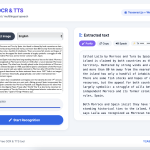
How to Build a Browser OCR Tool with Tesseract.js
Learn how to build a browser-based OCR app using Tesseract.js. Extract text from images directly in the browser with a simple client-side setup.


Suggested:

Learn how to use PHP and AJAX to update web content dynamically without refreshing the page. Improve UX, reduce load times, and build interactive websites with our simple tutorial and code examples.
In this blog, explore how PHP and AJAX work together to deliver smoother user interactions, and we’ll walk through a practical example of loading data dynamically.
Table of contents [Show]
Traditionally, every time a user submitted a form or clicked a button that required new data, the browser would send a request to the server and reload the entire page with the new content. This is not only inefficient but also negatively impacts user experience.
AJAX changes that by allowing parts of a web page to update without reloading the whole page. Here’s what it offers:
Let’s build a small example where clicking a button loads user data from the server.
1. HTML (index.html)
<!DOCTYPE html>
<html lang="en">
<head>
    <meta charset="UTF-8">
    <title>AJAX with PHP</title>
</head>
<body>
    <h2>User Information</h2>
    <button onclick="loadUser()">Load User</button>
    <div id="user-info"></div>
    <script>
        function loadUser() {
            const xhr = new XMLHttpRequest();
            xhr.open("GET", "get_user.php", true);
            xhr.onload = function() {
                if (xhr.status === 200) {
                    document.getElementById("user-info").innerHTML = xhr.responseText;
                }
            };
            xhr.send();
        }
    </script>
</body>
</html>
2. PHP (get_user.php)
<?php
// Simulate database data
$user = [
    "name" => "John Doe",
    "email" => "john@example.com",
    "location" => "New York"
];
echo "<ul>";
echo "<li><strong>Name:</strong> " . $user['name'] . "</li>";
echo "<li><strong>Email:</strong> " . $user['email'] . "</li>";
echo "<li><strong>Location:</strong> " . $user['location'] . "</li>";
echo "</ul>";
?>
What Happens Here:
get_user.php.Integrating AJAX with PHP is a powerful way to create modern, interactive web applications. Whether you're building a form that submits without reloading, a chat interface, or a live search feature, this duo allows you to create smooth, real-time experiences that users expect from today’s web.
Mastering dynamic content loading is not just about making things "cool"—it's about enhancing usability, performance, and engagement. So start experimenting with AJAX and PHP, and bring your web pages to life without the blink of a page reload!
What is AJAX in PHP?
AJAX (Asynchronous JavaScript and XML) is a technique that allows parts of a web page to update without reloading the entire page. When combined with PHP, it enables seamless data exchange between the client and server.
Using AJAX with PHP allows for smoother, faster interactions by updating content dynamically, reducing page reloads, and enhancing user experience.
Yes, AJAX can be used to submit forms to a PHP script without reloading the page. This allows for real-time validation and better user feedback.
No. While jQuery simplifies AJAX, you can also use native JavaScript methods like XMLHttpRequest or fetch() to make AJAX requests.
Yes, PHP remains widely used for server-side development, especially in CMS platforms like WordPress. It integrates well with front-end frameworks via AJAX.
PHP can return data in various formats such as plain text, HTML, JSON, or XML. JSON is commonly used for its simplicity and compatibility with JavaScript.
Implement error handling using HTTP status codes and proper server responses. Use JavaScript to detect errors via xhr.status or catch blocks for fetch().
Learn how to build a browser-based OCR app using Tesseract.js. Extract text from images directly in the browser with a simple client-side setup.
Step-by-step guide to creating a PHP backend that removes image backgrounds using Remove.bg API. Ideal for developers building automated image tools
Learn how to create a real-time PHP chat app using MySQL and JavaScript with user login, typing status, chat history deletion, and a modern, responsive UI.