7 Open-Source Projects Built with PHP | Real-World Applications
Explore 7 open-source projects built with PHP, including analytics, eCommerce, ERP, and support systems. See how PHP powers real-world applications.


Suggested:
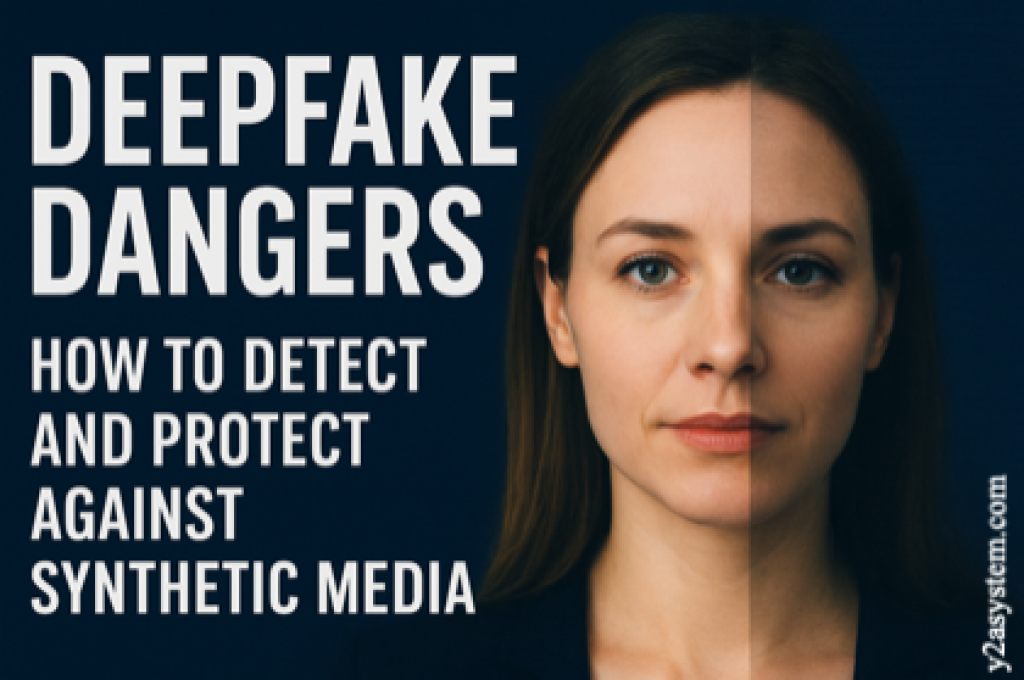
Explores the dangers of deepfakes, how they work, how to detect them, and practical ways to protect yourself and your organization from being deceived.
Table of contents [Show]
In today’s digital world, seeing is no longer believing. Thanks to advances in artificial intelligence (AI), deepfakes—highly realistic but fake images, videos, and audio—are becoming increasingly convincing. While synthetic media can be used for creativity, entertainment, and education, it also presents serious risks to individuals, organizations, and society at large.
Deepfakes are AI-generated synthetic media that use deep learning and generative adversarial networks (GANs) to create lifelike audio, video, or images that imitate real people.
By analyzing thousands of real photos, videos, or voice recordings, AI models learn to replicate someone’s facial expressions, voice, and mannerisms—making it possible to create realistic fake videos of anyone, saying or doing anything.
Common examples include:
While deepfake technology can be used for satire or filmmaking, it has also opened doors to misinformation, identity theft, and manipulation. Some key risks include:
Deepfakes can be weaponized to spread false information during elections or crises, creating confusion, distrust, and polarization.
Individuals—especially public figures—can be targeted with fake videos or images that damage their credibility or personal relationships.
Cybercriminals have started using AI-generated voices and faces to impersonate CEOs, family members, or bank officials to commit social engineering attacks and fraudulent transactions.
When people can no longer tell what’s real, it undermines trust in journalism, social media, and even personal communications.
Although deepfakes are becoming more sophisticated, there are still ways to identify them—both manually and with the help of technology.
Researchers and companies have developed tools that analyze digital artifacts and metadata to detect manipulated content.
Some popular deepfake detection tools include:
These solutions use AI models to scan and assign a “manipulation probability score” to help identify suspicious media.
As deepfakes become more widespread, prevention and awareness are critical. Here’s how to safeguard against synthetic media threats:
Awareness is the first line of defense. Conduct regular training to help employees and the public recognize signs of deepfakes and misinformation.
Always cross-check content from multiple trusted sources before believing or sharing it online—especially during breaking news or political events.
Use multi-factor authentication (MFA), biometric verification, and strong passwords to reduce impersonation risks.
Organizations can adopt digital watermarking, blockchain verification, and content provenance tools to track and verify the authenticity of media files.
Set up alerts or reputation management tools to identify potential misuse of your image, voice, or brand.
Deepfake technology is not inherently bad—it can be used ethically in fields like entertainment, accessibility, and education. However, as the line between real and fake blurs, society must establish ethical guidelines, technological defenses, and public awareness initiatives to maintain digital trust.
Governments and tech companies are beginning to respond with legislation, AI transparency rules, and content authentication standards, but individuals and organizations must also take proactive steps to stay protected.
Deepfakes represent one of the most profound challenges in the age of AI. As technology continues to evolve, so must our ability to think critically, verify information, and embrace digital literacy.
By combining awareness, detection tools, and ethical AI use, we can harness the creative potential of synthetic media—while minimizing its dangers.
Explore 7 open-source projects built with PHP, including analytics, eCommerce, ERP, and support systems. See how PHP powers real-world applications.
Discover the best free and powerful AI tools in 2026 for writing, design, coding, video editing, and productivity. No payment required.
Silent calls can record your voice for AI cloning scams. Learn how scammers use fake emergencies and how to protect yourself and your love ones.