7 Open-Source Projects Built with PHP | Real-World Applications
Explore 7 open-source projects built with PHP, including analytics, eCommerce, ERP, and support systems. See how PHP powers real-world applications.


Suggested:
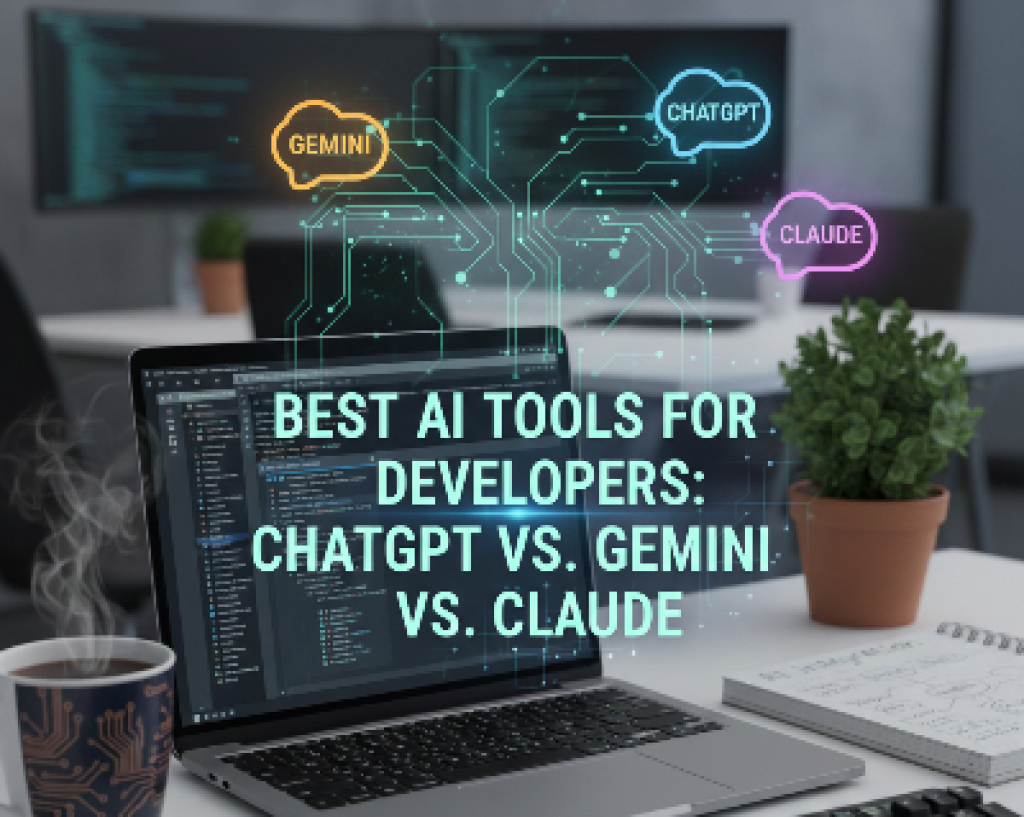
Discover the ultimate collection of the Best AI Tools for Developers, designed to enhance productivity and streamline workflows. These cutting-edge tools leverage advanced algorithms to automate coding tasks, optimize debugging processes, and provide intelligent code suggestions, allowing developers to focus on innovation rather than routine tasks.
When it comes to AI tools for developers, ChatGPT (OpenAI), Gemini (Google), and Claude (Anthropic) are among the top contenders. Each has unique strengths depending on your needs—whether it's coding assistance, reasoning, or integration with developer workflows. Here’s a detailed comparison:
Table of contents [Show]
Best for: Code generation, debugging, and general-purpose AI assistance.
Models: GPT-4 (paid), GPT-3.5 (free)
Key Features:
✅ Strong code generation (Python, JavaScript, C++, etc.)
✅ Large context window (128K in GPT-4 Turbo)
✅ Custom GPTs & API access for workflow integration
✅ Advanced reasoning for debugging and optimization
✅ Multi-modal (GPT-4V) for image-based inputs (e.g., diagrams → code)
❌ No real-time web access in default mode (requires plugins/browsing)
Best for developers who: Need a versatile AI for coding, documentation, and problem-solving.
Best for: Research-heavy tasks, integration with Google services, and multimodal AI.
Models: Gemini 1.5 Pro (latest), Gemini Ultra (most advanced)
Key Features:
✅ Strong integration with Google tools (Docs, Sheets, Search)
✅ Multimodal from the start (text, images, audio, video)
✅ Free tier available (Gemini Pro)
✅ Long context handling (up to 1M tokens in experimental versions)
❌ Weaker at coding compared to ChatGPT & Claude
❌ Less developer-focused (fewer coding-specific optimizations)
Best for developers who: Work with Google Cloud, need research assistance, or multimodal AI.
Best for: Long-context reasoning, safety-focused AI, and document analysis.
Models: Claude 3 (Opus, Sonnet, Haiku)
Key Features:
✅ Best long-context handling (200K tokens standard, up to 1M in some versions)
✅ Strong at summarization & doc analysis (PDFs, research papers)
✅ Balanced reasoning & coding (better than Gemini, slightly behind GPT-4)
✅ Constitutional AI (more aligned with safety/ethics)
❌ No multimodal yet (text-only)
❌ Smaller ecosystem (fewer plugins/integrations than OpenAI)
Best for developers who: Need to process large documents, prefer ethical AI, or work with long codebases.
| Feature | ChatGPT (GPT-4) | Gemini 1.5 Pro | Claude 3 Opus |
|---|---|---|---|
| Best For | Coding & debugging | Google ecosystem & research | Long docs & safety |
| Code Quality | ⭐⭐⭐⭐⭐ | ⭐⭐⭐ | ⭐⭐⭐⭐ |
| Context Length | 128K | 1M (experimental) | 200K (up to 1M) |
| Multimodal | ✅ (GPT-4V) | ✅ (Native) | ❌ |
| API Access | ✅ (Paid) | ✅ (Gemini Pro) | ✅ (Anthropic API) |
| Free Tier | GPT-3.5 only | ✅ (Gemini Pro) | Limited |
Explore 7 open-source projects built with PHP, including analytics, eCommerce, ERP, and support systems. See how PHP powers real-world applications.
Discover the best free and powerful AI tools in 2026 for writing, design, coding, video editing, and productivity. No payment required.
Silent calls can record your voice for AI cloning scams. Learn how scammers use fake emergencies and how to protect yourself and your love ones.